More bot traffic can mean more spam, more server strain, more fake leads, and more security risk. Here’s what may be causing the spike.
Bot traffic on your website isn’t automatically a crisis. Some bots are useful, like search engine crawlers that help your site appear in search results. Others are much less helpful. They scrape content, spam forms, test login pages, overload servers, and look for weak spots.
The issue is context. A sudden increase in bot traffic on your website can be a warning sign that your site is easier to access, easier to abuse, or easier to probe than it should be.
OWASP classifies automated web threats as software-driven activity that creates unwanted behavior on web applications, including abuse that can affect performance, data, accounts, forms, and business operations. Google also notes that tools like reCAPTCHA help protect websites from spam and abuse by making it harder for automated software to interact with forms and other site actions.
Here are six common reasons bot traffic may be increasing.
1. Your Website Is Running On Older Server Infrastructure
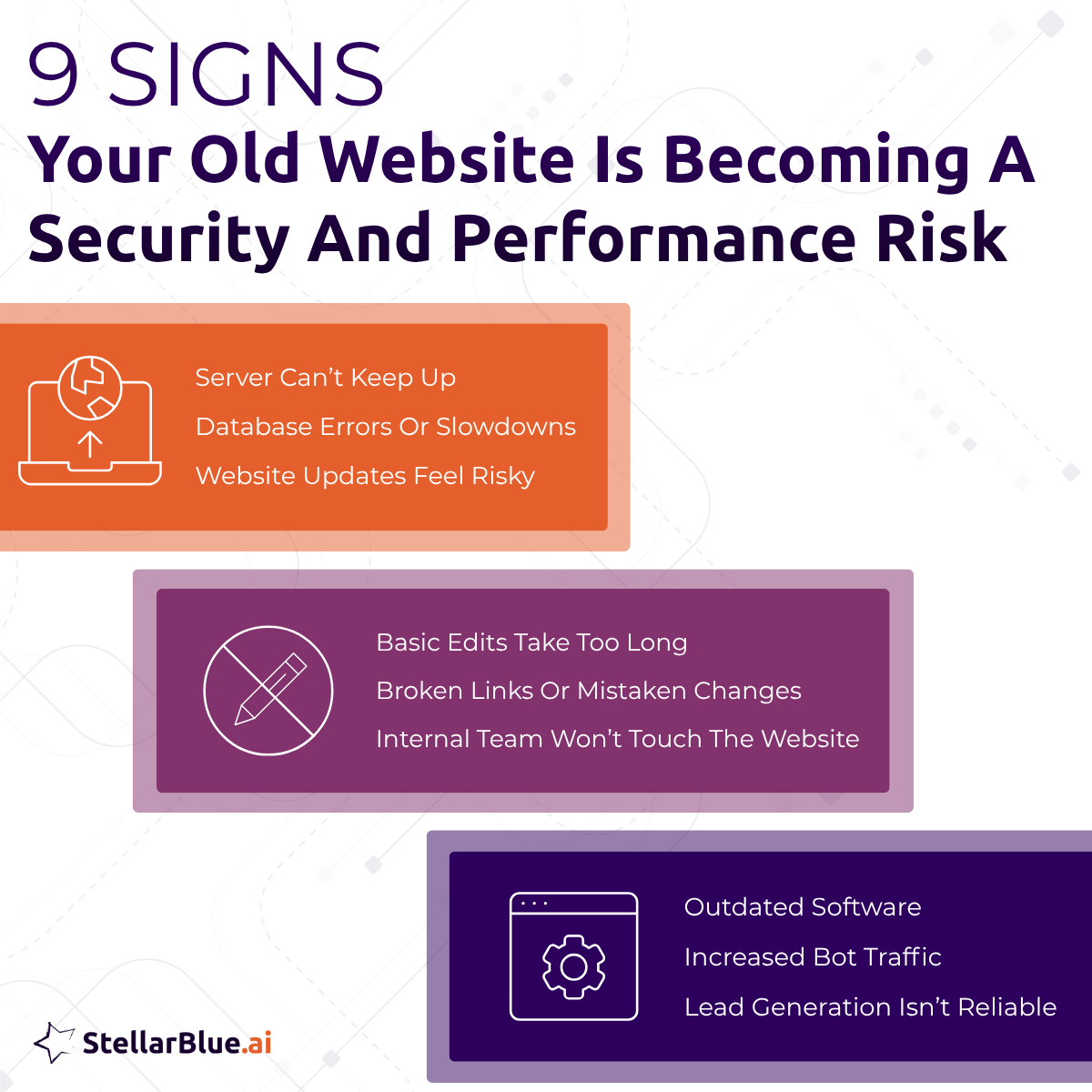
Older servers can attract more unwanted bot activity because they often lack the modern defenses that newer hosting environments include by default.
That may include:
- Outdated firewall rules
- Weak rate limiting
- Missing bot filtering
- Older PHP, CMS, or plugin versions
- Limited monitoring
- No modern CAPTCHA or form protection
- Security plugins that are outdated, misconfigured, or missing entirely
Bots look for easy targets. If your site is on an older server and hasn’t had a recent security review, automated tools may see it as a softer target. That doesn’t mean your site has been hacked, but it does mean the door may be easier to knock on.
This is especially common with older WordPress websites, legacy hosting accounts, and sites that haven’t had a technical refresh in several years.
2. Your Forms Are Easier For Bots To Submit
If your site doesn’t have strong form protection, bots may submit fake inquiries, spam messages, malicious links, or junk account requests. These submissions can make your marketing data messy and waste your sales team’s time.
Modern form protection may include:
- reCAPTCHA or similar human verification
- Honeypot fields
- Rate limits
- Spam filtering
- IP blocking
- Form validation
- Security monitoring
The goal is simple: make it easy for real prospects to contact you and harder for bots to flood your inbox.
3. Your Site Is Being Scraped By AI Crawlers And Content Bots
Bot traffic has also increased because more organizations are crawling websites for search, AI, competitive research, pricing data, and content indexing.
Cloudflare’s reporting has highlighted the growing role of bots and AI-related crawlers across internet traffic, including automated activity coming from cloud provider networks. This type of traffic may not always be malicious, but it can still create problems.
AI crawlers and scrapers can:
- Increase server load
- Distort analytics
- Consume bandwidth
- Copy or summarize your content
- Reduce visibility into real visitor behavior
For businesses investing in content marketing, this matters. Your analytics should help you understand prospects, not get buried under automated visits.
4. Your Website Is Ranking Better Or Getting More Visibility
A rise in bots can sometimes follow a positive change. If your website is publishing more content, ranking better in search, running campaigns, or earning backlinks, bots may discover it more often.
This can include:
- Search engine crawlers
- SEO audit tools
- Competitive intelligence tools
- Link checkers
- Content indexers
- Ad verification bots
This type of activity isn’t always dangerous, but it still needs to be monitored. A healthy website should allow legitimate crawlers while limiting abusive ones.
The problem is that many businesses don’t know the difference. They see traffic go up and assume visibility improved, when part of that spike may be automated activity that will never become a lead.
5. Attackers May Be Testing Login Pages Or Known Vulnerabilities
Some bots are designed to test websites at scale. They scan for outdated plugins, weak passwords, exposed admin pages, vulnerable themes, unsecured APIs, and common CMS issues.
This is where bot traffic becomes a direct security concern.
Automated attacks may include:
- Brute-force login attempts
- Credential stuffing
- Plugin vulnerability scans
- Fake user registrations
- Checkout abuse
- Form spam
- Directory probing
Imperva’s 2025 Bad Bot Report noted that automated threats accounted for 31% of all attacks it recorded and mitigated in the prior year, with bots and scripts used to exploit vulnerabilities at scale.
If your site is receiving more bot traffic and you also see failed login attempts, unusual server activity, spam submissions, or performance issues, it’s time to take that seriously.
6. Your Security Tools May Be Missing, Outdated, Or Misconfigured
Security tools are only useful when they’re installed, current, and configured correctly.
A website may technically have security plugins, CAPTCHA, backups, and firewall tools, but still be vulnerable if they haven’t been reviewed in months or years. Plugins may be expired. CAPTCHA may only protect one form. Firewall settings may be too loose. Admin pages may be exposed. Analytics may be recording bot traffic as normal users.
This is why a security review should look at the full environment, not just one plugin.
A proper review should check:
- Hosting and server configuration
- CMS, theme, and plugin updates
- Form protection
- CAPTCHA setup
- Firewall and malware scanning
- Login security
- Backup health
- Analytics filtering
- Suspicious traffic patterns
- Known vulnerabilities
Bot traffic is rarely one isolated issue. It’s usually connected to the overall health of your website.
Why Increased Bot Traffic Can Hurt Your Website
More bots can affect more than your analytics dashboard.
They can slow down page load times, create fake leads, inflate campaign numbers, increase hosting resource usage, and expose weak points in your site’s security. If bots are repeatedly hitting forms, login pages, or old URLs, they may also reveal technical debt that needs attention.
For a business website, the concern is practical. Your site should help visitors take action, support your sales process, and protect your brand. Bot traffic can interfere with all three.
What To Do Next
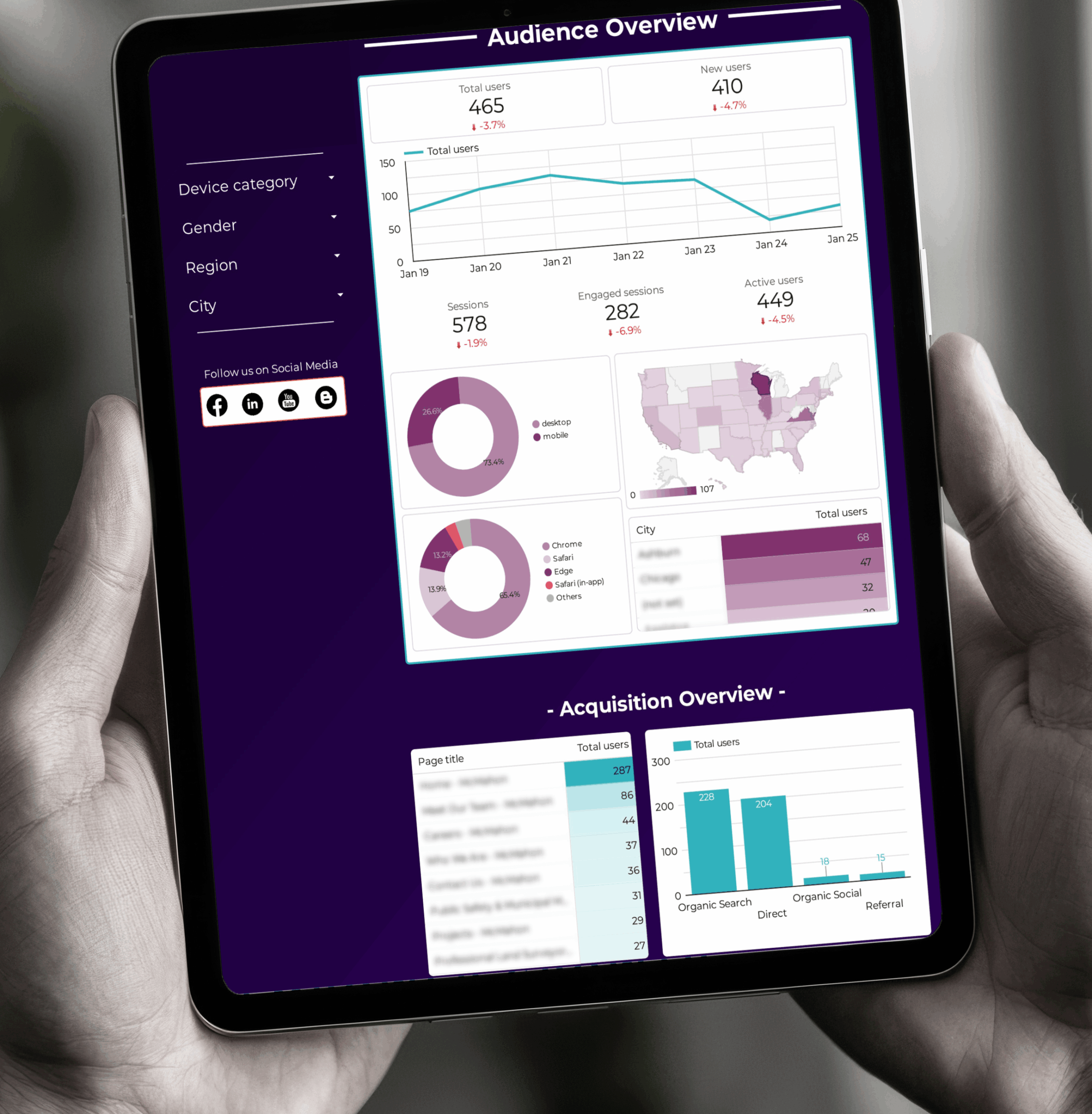
Start by reviewing your analytics, form submissions, server logs, and security alerts. Look for sudden traffic spikes, unusual countries or IP ranges, repeated visits to login pages, high bounce rates, spam form submissions, and traffic that doesn’t match real marketing activity.
Then have the site reviewed by a technical team that understands security, hosting, website performance, and lead generation together.
Schedule A Website Security Audit
If bot traffic on your website is increasing, don’t wait until it becomes a bigger issue.
StellarBlue.ai can review your website security, server setup, forms, plugins, CAPTCHA protection, and suspicious traffic patterns. We’ll help identify what’s normal, what’s risky, and what should be fixed first.
Schedule a Website Security Audit with StellarBlue.ai and get a clearer picture of how protected your site really is.